
Moles, also known as nevi, are clusters of pigmented cells that can appear as small, dark spots on the skin. They are usually brown or black but can also be flesh-colored.
The primary cause of skin moles is the accumulation of melanocytes, the pigment-producing cells in the skin. These cells are distributed throughout the skin and are responsible for giving it color. When these cells grow together instead of being spread out, they form a mole.
While most moles are harmless, changes in the size, shape, color, or texture of moles should be evaluated by a dermatologist, as these changes could indicate skin cancer, particularly melanoma.
Regular skin checks, protection from sun exposure, and prompt evaluation of any concerning moles are essential for maintaining skin health.

Types of moles
Common moles
Small, round, and typically brown in color. They are usually harmless.
Atypical moles (Dysplastic Nevi)
Larger than common moles, with irregular borders and varying colors. While most are harmless, some may indicate an increased risk of skin cancer.
Congenital moles
Moles present at birth, which can vary in size and shape.
Acquired moles
Develop after birth due to exposure to sunlight and other environmental factors.
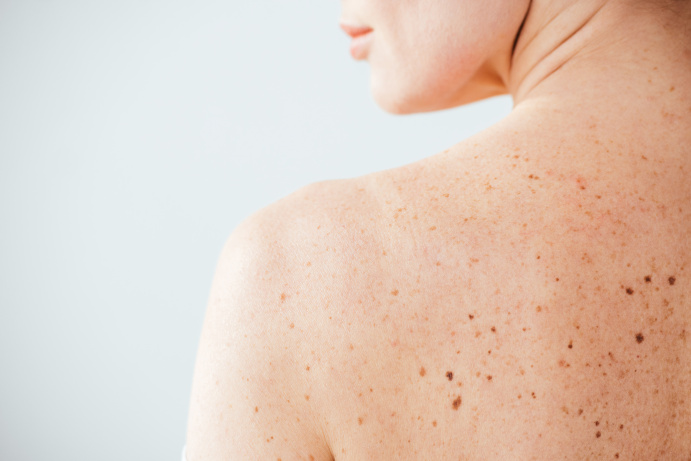
Risk factors for skin moles
Skin moles are generally common and often harmless, but certain factors may increase the risk of developing them.
- If you have a family history of multiple moles or a history of melanoma, you may be at a higher risk.
- People with fair skin are generally more prone to developing moles than those with darker skin. Fair skin is also a risk factor for skin cancer.
- Prolonged sun exposure, especially during childhood, can increase the number of moles.
- Childhood sunburns has been linked to an increased risk of developing moles and skin cancer later in life.
- Hormonal changes such as those occurring during adolescence and pregnancy, can lead to the formation of moles.
- Moles tend to develop during the first few decades of life. The number of moles typically increases until around the age of 40.
- Individuals with weakened immune systems, whether due to medical conditions or medications, may have an increased risk of developing atypical moles or skin cancer.
- Use of tanning beds can increase the risk of developing moles and skin cancer.
What to look for when examining skin moles

The ABCDE rule is a helpful guideline for examining skin moles and identifying potential signs of melanoma, a type of skin cancer. When checking moles, pay attention to the following characteristics:
Asymmetry (A)
A normal mole is usually symmetrical, meaning if you were to draw a line through the center, the two halves would be roughly equal. Melanomas often have irregular shapes and are asymmetrical.
Border (B)
The borders of a benign mole are typically smooth and well-defined. Melanomas, on the other hand, may have irregular, notched, or blurred borders.
Color (C)
Most benign moles are a single, uniform color, often brown or tan. Melanomas can exhibit a variety of colors, including black, brown, red, white, or blue. Multiple colors within a single mole can be a warning sign.
Diameter (D)
Benign moles are smaller in diameter, usually less than 6 millimeters (about the size of a pencil eraser). Melanomas tend to be larger, although it's important to note that some melanomas can be smaller when first detected.
Evolution or elevation (E)
Changes in size, shape, color, or elevation over time can be a red flag. Keep an eye on any mole that evolves or becomes raised above the skin surface.
It's important to note that the ABCDE rule is a useful tool, but it's not an exhaustive diagnostic method. Other warning signs may include itching, tenderness, or bleeding.
If you notice any concerning changes in your moles or if you have a new mole that exhibits these characteristics, it's crucial to consult with a dermatologist for a professional evaluation. Regular self-examinations and annual skin checks by a dermatologist are essential for early detection and treatment of skin cancers.
- Log in to post comments